
Getting a tattoo is one of those unforgettable life experiences—it’s a mix of excitement, creativity, and self-expression. But let’s be honest: for many people, the thought of sitting through hours of needlework brings one big concern—pain. While some embrace the sting as part of the process, others look for ways to make it more comfortable. That’s where tattoo numbing cream comes in.
Tattoo numbing creams are topical anesthetic creams, often made with ingredients like lidocaine, prilocaine, or benzocaine, designed to temporarily block pain signals in the skin. When used correctly, they can make the tattoo process far more tolerable without interfering with ink quality or the work of your tattoo artist. Many are even dermatologist-recommended and available as over-the-counter, fast-acting, long-lasting, or prescription-strength formulas, giving you options based on your comfort level and skin sensitivity.
In this guide, you’ll learn how to apply tattoo numbing cream step by step, the safety precautions and side effects you should know, and what to expect in terms of effectiveness and duration. We’ll also look at popular numbing cream brands like TKTX, Zensa, and Dr. Numb, share insights from tattoo artists and dermatologists, and answer the most common questions users have about numbing products.
By the end, you’ll feel more confident about whether numbing cream is the right choice for you, how to use it safely, and what to expect during your tattoo session. This way, you can focus less on the pain and more on enjoying your new piece of art.
🚀 Popular Guide: High Strength Tattoo Numbing Creams

What Is Tattoo Numbing Cream?
If you’ve ever wondered how some people sit through long tattoo sessions with minimal discomfort, the answer is often tattoo numbing cream. Simply put, these are topical anesthetic creams designed to dull the sensation of pain by temporarily blocking nerve signals in the skin. They’re most commonly formulated with active ingredients like lidocaine, prilocaine, or benzocaine, all of which are well-known local anesthetics used in both medical and cosmetic procedures.
Think of tattoo numbing cream as a temporary shield between your skin and the tattoo needle. Unlike painkillers you swallow, these creams work directly on the surface layer of your skin, making them a targeted solution for tattoo pain relief. That’s why they’re also marketed as tattoo anesthetic creams or numbing gels for tattoos, giving users a way to stay comfortable while still achieving the design they want.
When it comes to availability, there are two main categories:
- Over-the-counter numbing creams – Easily found in pharmacies, online stores, or even some tattoo shops, these typically contain lower percentages of lidocaine but are effective for most small to medium tattoos.
- Prescription-strength numbing creams – Recommended in certain cases by dermatologists or healthcare providers, these contain stronger concentrations and are regulated under authorities like the FDA (U.S. Food & Drug Administration) to ensure safety.
Naturally, one question that arises is: Are these creams safe to use? When applied correctly and according to instructions, they are considered safe for most people. In fact, many dermatologist-recommended numbing creams are specifically marketed for people with sensitive skin or those who want a fast-acting, long-lasting, hypoallergenic solution. However, misuse—like applying too much or leaving it on for too long—can increase the risk of side effects, which is why professional guidance is always a good idea.
In short, tattoo numbing creams are not just about dulling pain; they’re about improving comfort, reducing stress during a tattoo session, and allowing you to sit longer for more detailed work. Whether you’re looking for a non-greasy, quick-drying gel for a small tattoo or a maximum-strength cream for larger areas, there’s an option suited to your needs.

Does Numbing Cream Really Work for Tattoos?
The short answer is yes—numbing cream does work for tattoos, but understanding how it works and what to expect can help you decide if it’s the right choice for you. Tattoo numbing creams contain local anesthetics like lidocaine, benzocaine, or prilocaine, which temporarily block pain signals from reaching the brain. When applied properly, these ingredients penetrate the upper layers of skin and desensitize the area, making the sharp sting of tattoo needles far less intense.
For many people, this means the difference between gritting their teeth through the session and actually being able to sit calmly while the artist works. It’s especially useful for large tattoos, sensitive skin areas, or long sessions, where the discomfort can become overwhelming.
But what about alternatives like sprays and gels? Let’s compare:
- Numbing Creams: Typically longer-lasting and provide deeper numbing effects. They’re applied before the tattoo begins, often under a wrap, and can keep pain at bay for several hours.
- Numbing Sprays: Designed for quick, on-the-spot relief during a tattoo session. They act fast but usually don’t last as long as creams. Tattoo artists sometimes use them mid-session if the pain gets intense.
- Numbing Gels: Similar to sprays, gels are easier to apply during breaks but may not penetrate as deeply as creams. They’re often chosen for touch-ups or smaller designs.
A common concern is: Does numbing cream affect tattoo ink? This is one of the biggest myths in the tattoo world. When applied correctly and not overused, numbing creams do not interfere with the way ink settles in the skin. Professional artists and dermatologists generally agree that modern formulations are safe, provided you stick to recommended guidelines. The idea that numbing creams cause tattoos to fade faster is another myth about tattoo fading—fading usually happens due to factors like sun exposure, poor aftercare, or natural skin regeneration, not because of numbing products.
In the end, tattoo numbing cream isn’t a magic pain eraser, but it can significantly improve your experience. The key is choosing the right type—whether a fast-acting cream, a quick-relief spray, or a light gel—and applying it properly. If you’re unsure, consult your tattoo artist or dermatologist for personalized advice based on your skin type and tattoo design.

When Should You Use Numbing Cream?
Not every tattoo session requires numbing cream, but there are certain situations where it can make a world of difference. If you’re considering whether to use a safe numbing cream for tattoos, the answer often depends on the size of the tattoo, the location on your body, and your personal pain tolerance.
One of the most common reasons people reach for numbing cream is when getting large tattoos. Sitting for multiple hours while the needle works across a wide surface area can test even those with a high pain threshold. By applying a long-lasting anesthetic cream beforehand, you’ll be able to focus more on your artist’s work and less on managing discomfort.
Numbing cream also proves helpful for tattoos in sensitive areas such as the ribs, spine, chest, inner thighs, or feet. These regions have thinner skin, more nerve endings, and often cause sharper pain compared to less sensitive spots like the upper arm or calf. In such cases, a dermatologist-recommended numbing cream can take the edge off and make the process more bearable.
It’s also worth considering if you have a low pain tolerance or are new to tattoos altogether. Many first-timers feel anxious about how painful the experience will be, and applying numbing cream can reduce that anxiety while still letting them enjoy the process of getting their tattoo.
That said, it’s important to know when not to use numbing cream. Some tattoo artists prefer working without it, as overly thick or improperly applied cream can affect skin texture during the tattooing process. Always talk to your artist beforehand—they may have preferences based on their technique. In addition, if you have allergies, skin conditions, or are pregnant, it’s best to consult a dermatologist before applying any topical anesthetic.
In most cases, both tattoo artists’ advice and dermatologist recommendations lean toward responsible use: numbing cream is safe and effective when applied correctly, but it shouldn’t be treated as a one-size-fits-all solution. By considering your tattoo’s size, location, and your comfort level, you’ll know whether numbing cream is the right choice for your session.
Step-by-Step Guide: How To Apply Tattoo Numbing Cream
Knowing how to apply numbing cream for a tattoo correctly is just as important as choosing the right product. When used properly, numbing creams can deliver the promised fast-acting relief, deep penetration, and long-lasting comfort without interfering with your tattoo artist’s work. Here’s a simple, step-by-step guide to make sure you get the best results.
1. Prepare Your Skin
Start by gently shaving the area where your tattoo will be placed. This not only removes hair but also ensures the cream comes in direct contact with the skin. Next, wash the skin thoroughly with mild soap and water to remove any dirt, oil, or residue. Avoid using lotions or moisturizers beforehand, as they can create a barrier that prevents the numbing cream from absorbing properly.
2. Apply the Right Amount of Cream
Once the skin is clean and dry, apply a thick, even layer of numbing cream over the area. Don’t rub it in completely like you would with regular lotion. Instead, let it sit on top of the skin so the active ingredients—like lidocaine or benzocaine—can start working effectively. The goal is to create a generous coating that allows for deep penetration into the nerve endings.
3. Seal It with Plastic Wrap (Occlusion Method)
To maximize the cream’s effectiveness, cover the treated area with plastic wrap or cling film. This technique, known as the occlusion method, traps heat and prevents the cream from drying out too quickly. It helps the active ingredients sink deeper into the skin, giving you that quick-drying yet long-lasting numbness many users look for.
4. Wait the Right Amount of Time
Timing is everything. Most numbing creams need about 30 to 60 minutes to fully activate, depending on the brand and strength. This raises a common question: how long before a tattoo should I apply numbing cream? The sweet spot is typically 45 minutes before your session begins, but always check the instructions on your specific product. Applying too early may cause the numbing effect to wear off mid-session, while applying too late may not give the cream enough time to work.
5. Remove Before Tattooing Begins
Just before your tattoo session starts, gently wipe away any excess cream and plastic wrap with a clean cloth or paper towel. Your skin should feel slightly numb to the touch but not greasy or sticky, making it easier for your artist to start tattooing without complications.
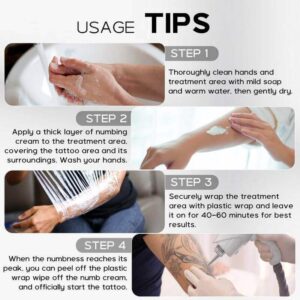
Following these steps ensures your numbing cream provides the safe, consistent pain relief it’s designed for. By combining proper preparation, the right amount of cream, and the occlusion method, you’ll give yourself the best chance at a more comfortable tattoo experience.

Safety Precautions & Side Effects
While tattoo numbing creams are widely used and generally safe, it’s important to understand the possible risks and precautions before applying them. Like any topical product, they can cause unwanted reactions if misused or if your skin is particularly sensitive. Knowing what to watch out for ensures you enjoy the benefits of a dermatologist-recommended, hypoallergenic cream without unnecessary risks.
1. Skin Irritation and Allergic Reactions
Some people may experience mild side effects such as redness, itching, or a burning sensation after applying numbing cream. This is especially true if you have sensitive skin or if the product contains fragrances or additional ingredients beyond the active anesthetics like lidocaine or benzocaine. To reduce the risk, it’s wise to do a small patch test on your skin at least 24 hours before your tattoo session.
2. Risks of Overuse
Using too much numbing cream or leaving it on for longer than recommended can be harmful. Overuse may lead to dizziness, headaches, or in rare cases, more serious side effects if large amounts of anesthetic enter the bloodstream. This is why both the FDA and healthcare professionals emphasize following product instructions closely.
3. Numbing Cream Side Effects During Tattooing
Sometimes, if applied incorrectly, numbing creams can cause temporary changes to skin texture—making it feel softer or slightly swollen. While this doesn’t usually affect tattoo ink, it can make the process more challenging for your artist. Always let your tattoo artist know if you’re planning to use numbing cream so they can adjust their technique if needed.
4. Safe Use for Sensitive Skin
For those with sensitive skin, choosing a cream that is hypoallergenic, quick-drying, and dermatologist-recommended can lower the chances of irritation. Many products are designed specifically for sensitive users and still provide fast-acting, deep-penetrating relief without causing additional problems.
5. Over-the-Counter vs. Prescription-Strength
Most people will do fine with over-the-counter numbing creams, which are widely available and FDA-regulated for safety. However, in certain cases—such as very large tattoos or individuals with extremely low pain tolerance—a prescription-strength formula may be suggested by a dermatologist or other healthcare provider.
At the end of the day, tattoo numbing creams are a valuable tool for pain management, but like any product that affects your body, they need to be used responsibly. Following safety precautions, consulting healthcare providers when in doubt, and communicating with your tattoo artist will help you avoid side effects while still enjoying a more comfortable tattooing experience.
Best Tattoo Numbing Creams & Popular Brands
When it comes to choosing the best numbing cream for tattoos, it’s not just about pain relief—it’s about finding a product that suits your skin type, tattoo size, and personal comfort level. With so many options available, knowing which brands stand out can save you time, money, and unnecessary trial and error. Below are some of the most popular and trusted names in the tattoo community, along with what makes them unique.
1. TKTX
One of the most talked-about brands, TKTX offers a range of maximum-strength lidocaine tattoo creams that are favored for their long-lasting effects. Many users find it especially effective for large tattoos or extended sessions, as the numbing effect can last several hours. However, because TKTX has many versions on the market, it’s important to buy from reputable sources to ensure authenticity.
2. Zensa
Zensa has become a go-to option for those with sensitive skin thanks to its hypoallergenic, natural formulation. It’s a dermatologist-recommended cream that is both easy-to-apply and safe for sensitive areas. Zensa is also FDA-approved, which gives users added confidence in its safety and reliability. Many tattoo artists recommend it for first-timers because it balances effectiveness with gentle ingredients.
3. Emla
Emla cream is a medical-grade anesthetic often prescribed by healthcare providers. Containing both lidocaine and prilocaine, it offers deep penetration and reliable numbing power. While not always marketed directly for tattoos, it’s widely used by professionals for various cosmetic and medical procedures, making it a strong option for people seeking proven results.
4. Dr. Numb
Known for its fast-acting formula, Dr. Numb is one of the most recognized names in the tattoo numbing market. It’s waterproof, odorless, and non-greasy, making it practical for use on all skin types. Many users like that it doesn’t leave behind sticky residue, which helps tattoo artists work more smoothly.
5. Numb Master
This over-the-counter numbing cream has built a reputation for being both effective and accessible. Numb Master typically contains lidocaine and is designed for quick absorption, making it a reliable choice for smaller tattoos or touch-up sessions. Its quick-drying and easy-to-apply formula makes it convenient for those who want a straightforward solution.
Long-Lasting vs. Fast-Acting Creams
When comparing products, it often comes down to whether you need long-lasting relief or fast-acting comfort.
- Long-lasting creams like TKTX or Emla are great for multi-hour sessions or larger pieces.
- Fast-acting creams like Dr. Numb and Numb Master are better suited for smaller tattoos or when time is limited.
- Balanced options like Zensa provide a middle ground, offering steady numbing power while being gentle enough for sensitive skin.
Ultimately, the best choice depends on your skin, your pain tolerance, and your tattoo artist’s recommendations. Whether you’re after a maximum-strength cream, a dermatologist-approved formula, or an odorless, waterproof option, these trusted brands have earned their place as reliable solutions in the tattoo world.
Aftercare Tips When Using Numbing Cream
Using numbing cream can make the tattooing process more comfortable, but what happens after the session is just as important. Proper tattoo aftercare ensures your skin heals correctly while protecting the ink’s vibrancy. If you’ve used numbing cream, you’ll want to be extra mindful of how your skin reacts during the healing phase.
Follow Your Artist’s Instructions First
Your tattoo artist knows best. Every tattoo is unique, and so is your skin’s healing process. Always prioritize their professional advice when it comes to cleaning, moisturizing, and protecting your tattoo. Numbing cream can affect skin sensitivity temporarily, so your artist may adjust their aftercare recommendations accordingly.
Keep the Area Clean and Protected
After the tattoo session, gently wash the area with mild, fragrance-free soap and lukewarm water. Avoid scrubbing or using hot water, as freshly tattooed skin is highly sensitive. Pat the area dry with a clean towel and apply the recommended ointment or moisturizer. This step helps prevent infections and keeps your skin hydrated.
Moisturize Without Overdoing It
Hydration is key, but over-moisturizing can suffocate the skin and slow healing. Choose a non-comedogenic, fragrance-free moisturizer or the one your tattoo artist suggests. Numbing creams sometimes leave skin slightly drier than normal afterward, so pay attention to dryness without overapplying lotion.
Avoid Touching or Scratching
It’s normal to feel itching or mild irritation during healing, especially if you used a lidocaine-based numbing cream. Resist the urge to scratch or peel scabs, as this can lead to scarring and faded ink. Instead, gently tap the area or apply a thin layer of moisturizer to calm the sensation.
Be Mindful of Healing vs. Numbing Cream Effects
Some people confuse normal tattoo healing discomfort with the lingering effects of numbing cream. While the cream may reduce initial pain, it does not shorten healing time. Redness, peeling, and mild sensitivity are part of the natural recovery process and should not be mistaken for side effects of the cream.
Avoid Excessive Sun and Water Exposure
Fresh tattoos are vulnerable to damage. Keep the area away from direct sunlight, tanning beds, swimming pools, and hot tubs until fully healed. These environments can increase the risk of infections and fade your ink.
Watch for Signs of Infection or Allergic Reaction
If you notice unusual redness, swelling, pus, or prolonged irritation beyond typical healing, contact a healthcare provider or dermatologist. While most numbing creams are safe, sensitive skin may react differently, especially when combined with tattoo aftercare products.
FAQs
Does tattoo numbing cream really work?
Yes, tattoo numbing cream does work when applied correctly, as it temporarily blocks nerve signals in the skin. Most creams contain lidocaine or other topical anesthetics that reduce pain during the tattooing process, especially in sensitive areas. While it won’t eliminate all discomfort, many people report feeling significantly more comfortable compared to going without it, making it a trusted option recommended by both dermatologists and experienced tattoo artists.
Will numbing cream affect my tattoo ink or healing?
No, when used properly, numbing creams do not affect tattoo ink or the healing process. A common myth is that creams can dilute pigment or cause fading, but this isn’t supported by dermatological evidence. The key is choosing a safe, high-quality, dermatologist-recommended numbing cream and following your tattoo artist’s advice for aftercare. Proper application ensures your tattoo heals naturally without compromising its color or design.
When should I apply numbing cream before a tattoo?
Most tattoo numbing creams should be applied about 30–60 minutes before your tattoo session. This gives the active ingredients time to penetrate the skin and reach maximum effectiveness. For best results, apply a generous layer, cover it with plastic wrap using the occlusion method, and let it absorb fully. Your tattoo artist may also guide you on timing, so it’s always good to confirm with them beforehand.
Are there side effects of using numbing cream for tattoos?
Like any topical product, tattoo numbing creams may cause mild side effects such as redness, itching, or skin irritation, especially for people with sensitive skin. Rarely, allergic reactions can occur, which is why patch testing is recommended before applying to a large area. Dermatologists also advise against overusing or layering too much cream, as this can increase risks without improving effectiveness. Choosing FDA-approved or dermatologist-tested products lowers the chances of side effects.
Which is the best numbing cream brand for tattoos?
Some of the most popular and trusted brands include TKTX, Zensa, Emla, Dr. Numb, and Numb Master. Each has unique strengths — for example, Zensa is known for being vegan and dermatologist-approved, while TKTX is praised for its long-lasting formula. Dr. Numb and Emla are widely recognized for their fast-acting lidocaine blends. The best choice often depends on whether you need maximum strength, quick absorption, or long-duration pain relief.
Can I use numbing cream for all tattoo placements?
Yes, numbing cream can be applied almost anywhere on the body, but it’s especially useful in sensitive areas like the ribs, spine, ankles, or inner arm where pain is more intense. For larger tattoo sessions or if you have low pain tolerance, it can make a huge difference in comfort. However, always consult your tattoo artist first, as some may have preferences or recommendations based on the placement and style of tattooing.
Is numbing cream safe for everyone?
Most people can safely use over-the-counter tattoo numbing creams, but it’s not suitable for everyone. Pregnant or breastfeeding women, individuals with certain skin conditions, or people allergic to lidocaine or related anesthetics should avoid using it. If you’re unsure, consult a dermatologist or healthcare provider before applying. Safety also depends on following usage instructions carefully and not exceeding recommended doses.
Can I buy tattoo numbing cream over the counter?
Yes, many tattoo numbing creams are available over the counter at pharmacies, online retailers, and even in some tattoo studios. These usually contain up to 5% lidocaine, which is FDA-approved for topical use. Stronger, prescription-strength creams are available but generally recommended only under medical supervision. For most tattoo clients, an over-the-counter option provides enough pain relief without needing a prescription.
Conclusion
Tattoo numbing creams can make the journey of getting inked far more comfortable when used properly. By temporarily blocking pain signals in the skin, they allow you to sit through longer sessions or sensitive placements with greater ease. However, the key to safe and effective use lies in choosing a dermatologist-approved product, applying it correctly, and listening to your tattoo artist’s guidance. For anyone considering numbing cream, professional advice from a tattoo artist or dermatologist is always the best first step.
Choose a safe, dermatologist-approved numbing cream and follow the right steps for a pain-free tattoo experience.